- Bone-density testing, called a DXA scan, to measure and monitor bone strength. Bone-density testing, called a DXA scan, to measure and monitor bone strength.
- Adequate calcium and vitamin D, and weight-bearing exercise as advised. Adequate calcium and vitamin D, and weight-bearing exercise as advised.
- Fall-prevention steps at home to lower fracture risk. Fall-prevention steps at home to lower fracture risk.
- Review of medicines and health conditions that affect bone. Review of medicines and health conditions that affect bone.
- Prescription bone medicines, managed with your primary or bone-health physician, when test. Prescription bone medicines, managed with your primary or bone-health physician, when testing shows they are appropriate.
- Prompt orthopedic care if a fracture occurs. Prompt orthopedic care if a fracture occurs.
What is Osteoporosis?
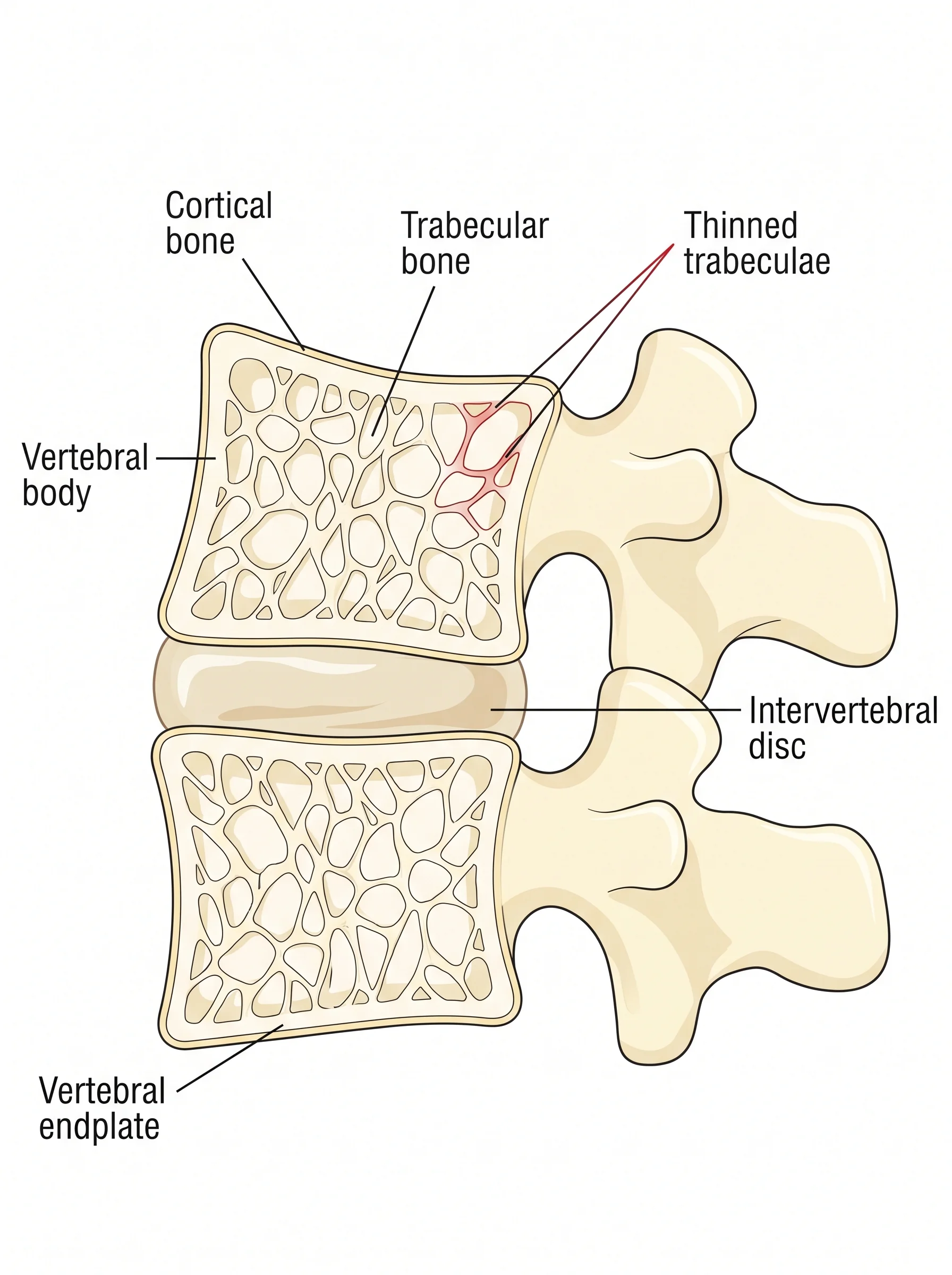
Osteoporosis is a condition in which bone becomes less dense and more fragile, so it breaks more easily.
It often has no symptoms until a fracture happens. It is more common with age and after menopause, and certain medicines and health conditions raise the risk. The bones of the hip, spine, and wrist are common sites of fragility fractures, which occur from a minor fall or even normal loads. Osteoporosis is measurable and manageable. Identifying it early, before a fracture, allows steps that reduce the chance of a break.
How is Osteoporosis diagnosed, and what does the visit involve?
Osteoporosis is diagnosed with a bone-density scan, a DXA test that measures how strong the bones are, often reported as a T-score.
It may be found after a fragility fracture prompts testing. Dr. Cole coordinates with your primary or bone-health physician so that testing and medicine are managed together.
What is recovery like for Osteoporosis?
Osteoporosis is a long-term condition managed over years.
The aim is to keep bone as strong as possible and to prevent fractures. When a fracture does happen, it is treated on its own terms, and the underlying bone health is addressed to lower the chance of the next one. Progress is tracked with repeat bone-density testing over time.
Who treats osteoporosis in Memphis?
Jeff Cole is a orthopedic surgeon who treats osteoporosis in Memphis, TN. Fellowship trained at Washington University / Barnes-Jewish Hospital. Dr. Cole sees patients at the practice in Memphis; appointments can be requested through this site.
Common questions
Does osteoporosis have symptoms?
Who should be tested for osteoporosis?
Can osteoporosis be treated?
What is a fragility fracture?
Educational information only. This page does not replace an examination or medical advice.
Reviewed by Jeff Cole
Fellowship trained at Washington University / Barnes-Jewish Hospital. Sees patients in Memphis.